
Bypassing the ATS: The Tech Professional’s Guide to Building Internal Champions
Stop relying on automated ATS systems. Learn how to bypass the bots and build internal champions to land your next tech role with Huntmode.
- career-advice
- networking
- ats-bypass
- linkedin-strategy
Bypassing the ATS: The Tech Professional’s Guide to Building Internal Champions
We’ve all been there. You find a role that aligns perfectly with your stack and your background. You spend an hour fine-tuning your resume, hit submit, and wait.
Weeks later, you get the automated rejection email from a no-reply address: “We’ve decided to move in a different direction.”
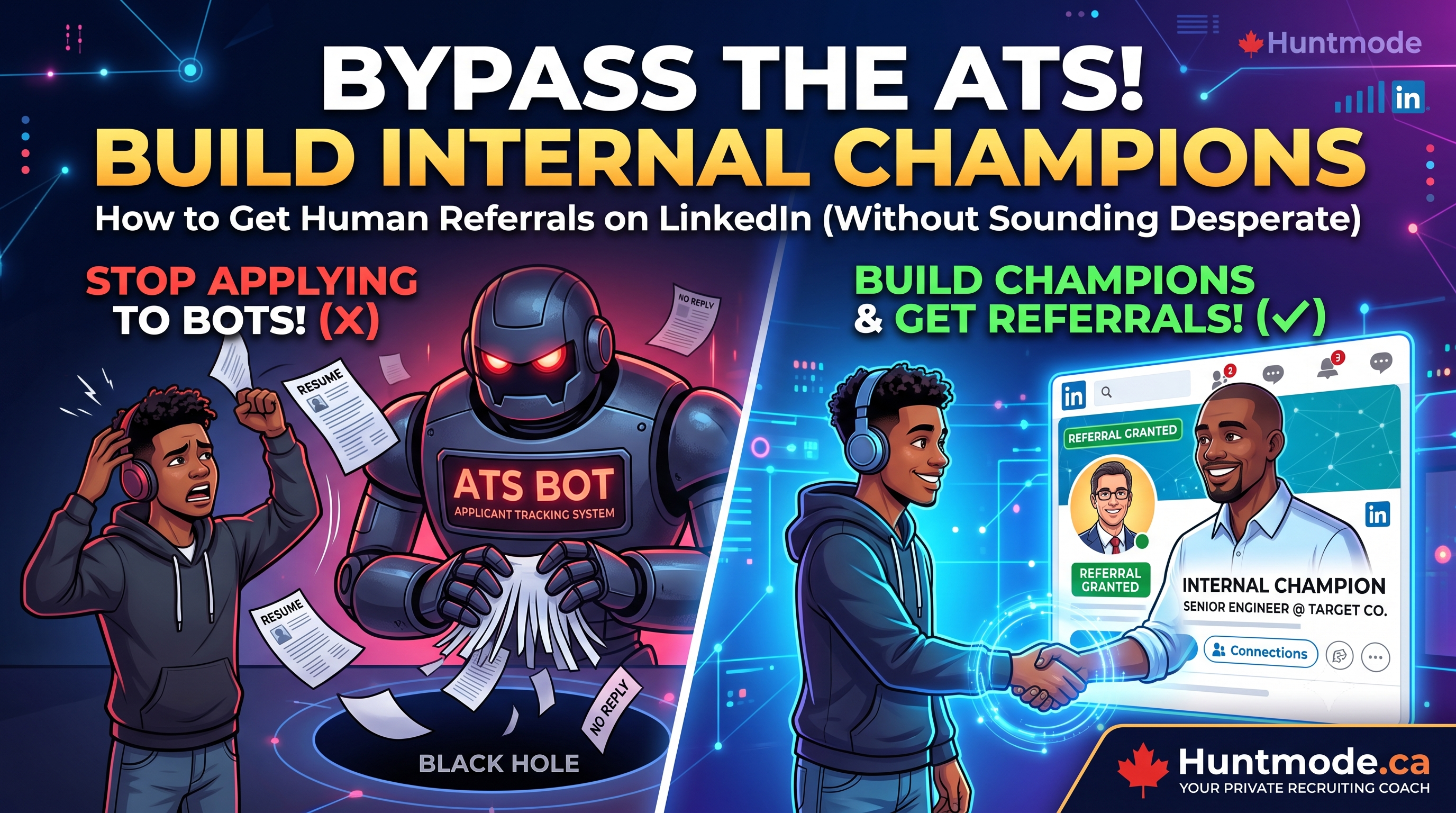
The harsh reality of the modern tech job hunt is that applying online is a defensive game. When a single engineering or GTM position attracts 500+ applicants in a weekend, recruiters rely entirely on Applicant Tracking Systems (ATS) to filter out 90% of the pile.
To beat the algorithm, you have to stop playing its game. You need an internal champion—a future peer inside the organization who will pull your resume out of the digital abyss and hand-deliver it to the hiring manager.
Here is your step-by-step playbook to building those relationships on LinkedIn without sounding desperate—and how to execute it all in stealth.
The Two Paths to a Tech Role
| The Traditional Route (Low Yield) | The Backchannel Route (High Yield) |
|---|---|
| Apply blindly through a public job portal. | Identify 2–3 potential peers on the target team. |
| Hope the ATS algorithm parses your keywords correctly. | Reach out to learn about their daily stack and technical challenges. |
| Sit in a database alongside 1,000+ other candidates. | Run a casual, 15-minute virtual coffee chat. |
| Result: Ignored, ghosted, or auto-rejected. | Result: Your resume is pushed to the top of the pile via an internal referral. |
The Backchannel Playbook
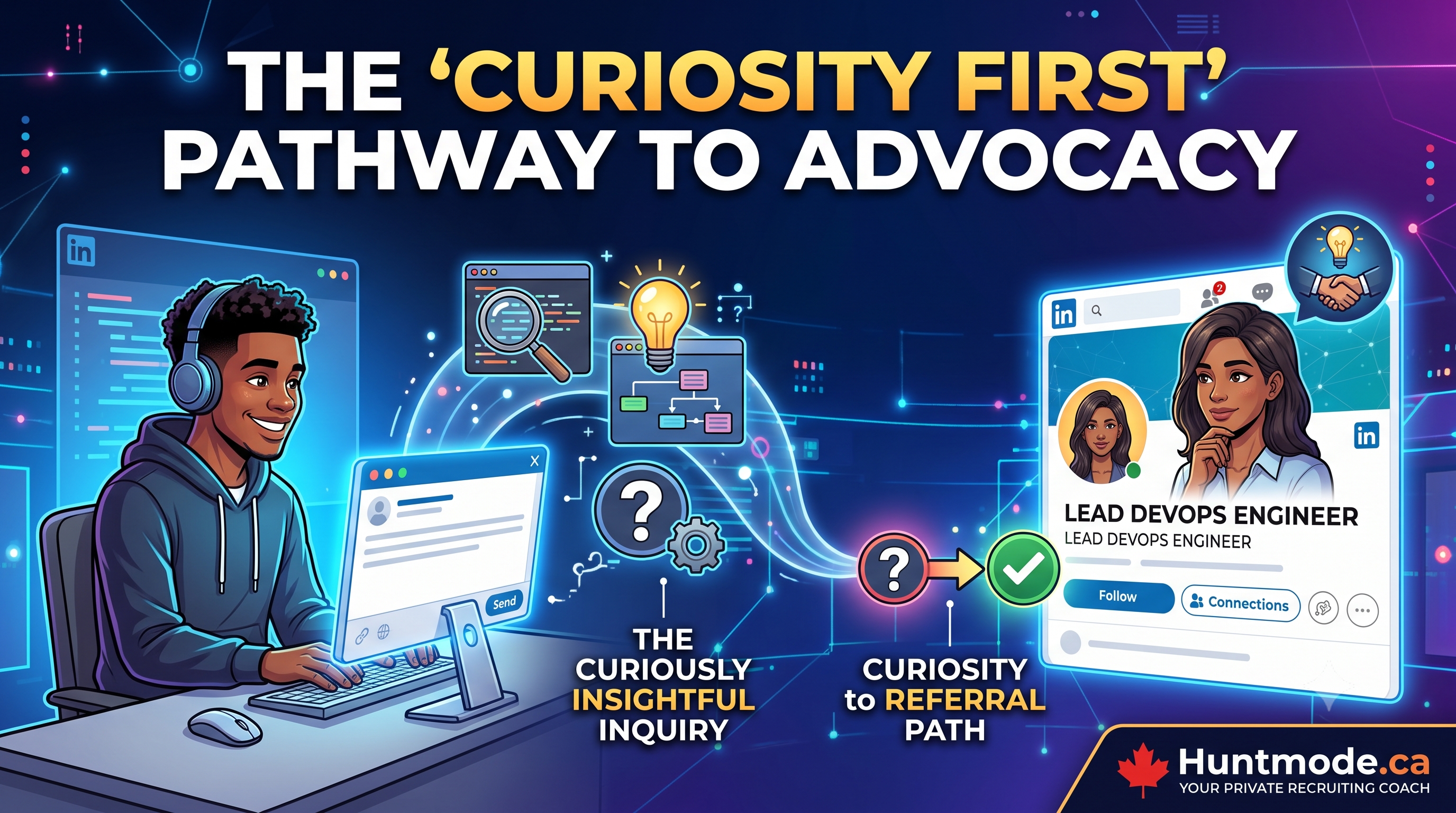
Building an internal champion isn’t about pitching yourself. It’s about professional curiosity. People love talking about their workflows, their bottlenecks, and their wins. If you approach an internal team member as a peer looking to learn, they will almost always open the door.
Step 1: Target Your True Peers
Recruiters are flooded with spam; do not message them. Instead, search LinkedIn for the people who are currently doing the job you want, or who sit directly adjacent to it. If you are aiming for a Technical Marketing role, look for the current Product Managers or the GTM Lead. If you want a DevOps role, find the Platform Engineers.
Step 2: The Low-Friction Connection
Send a highly personalized connection request. Do not ask for a job. Instead, ask a highly specific question about their tech stack, how they handle a known industry bottleneck, or how they manage cross-team collaboration. Keep it under 300 characters.
Step 3: The 15-Minute Discovery Chat
If they reply, ask for a quick 15-minute chat. Frame it entirely around learning. Ask questions like:
- “What is the biggest operational bottleneck your team is facing right now?”
- “How are you handling open-source telemetry metrics at your current scale?”
This proves you aren’t just a CV—you are a professional who understands the real-world complexities of the job.
Step 4: The Pivot
At the end of a solid conversation, mention the open role naturally. “I actually saw you guys are hiring for [Role]. Based on what you said about your current scaling challenges, I think my background could really help. Who is the best person to speak with about that?”
The “Curiosity First” Outreach Template
Here is a simple, high-converting template you can adapt for your target role.
Subject: Quick question about the [Team Name] stack at [Company]
Message: “Hi [Name], I noticed your work on the [Product/Team] at [Company]—really impressive stuff. I’m a [Your Role] exploring the space, and I was curious: how does your team handle [specific challenge, e.g., tracking open-source usage metrics without ballooning latency] over there? I’d love to grab 10 minutes sometime to hear what it’s really like on the ground. No worries if you’re slammed!”
The Missing Link: Your Private Recruiting Coach
Going backchannel is highly effective, but it requires deep research, strategy, and a bit of nerve. You shouldn’t have to do it alone.
At Huntmode.ca, we aren’t just another job board where you drop your resume and hope for the best. We built Huntmode to act as your private recruiting coach, strategist, and personal cheerleader—customized entirely to you.
Here is how Huntmode helps you execute the backchannel playbook:
- 100% Private Execution: Your job hunt is your business. Huntmode works entirely in the background, helping you map out your targets without broadcasting your search to your current employer or the public.
- Deep-Dive Org Intel: Before you hop on a discovery chat, Huntmode helps you look deeper into the organization. We help you understand what the role actually touches, anticipating the friction points that team is currently trying to solve.
- Custom Interview Prep: Tell Huntmode who you are meeting with. We’ll help you draft highly tailored questions that showcase your expertise, running through practice scenarios so you walk into that chat feeling sharp and confident.
- Your Personal Cheerleader: The job hunt is a grind. Huntmode is in your corner—tracking your connections, reminding you of your next tactical plays, and keeping your momentum high when things get tough.
Stop submitting your career to a black hole. Build your champions, prep like a pro, and let Huntmode coach you to the finish line.